
Runners and cyclists over 40 need strength training more than any other group of athletes we coach, and most do the least of it. The reason is understandable: if you have two hours on a Saturday, the trail wins. But endurance sports build a very specific kind of fitness and quietly neglect everything else, and after 40 that neglect starts to show up as the same handful of complaints. Here is what to add, what to skip, and how two coached sessions a week fit into a training week in Middleton without stealing your miles.
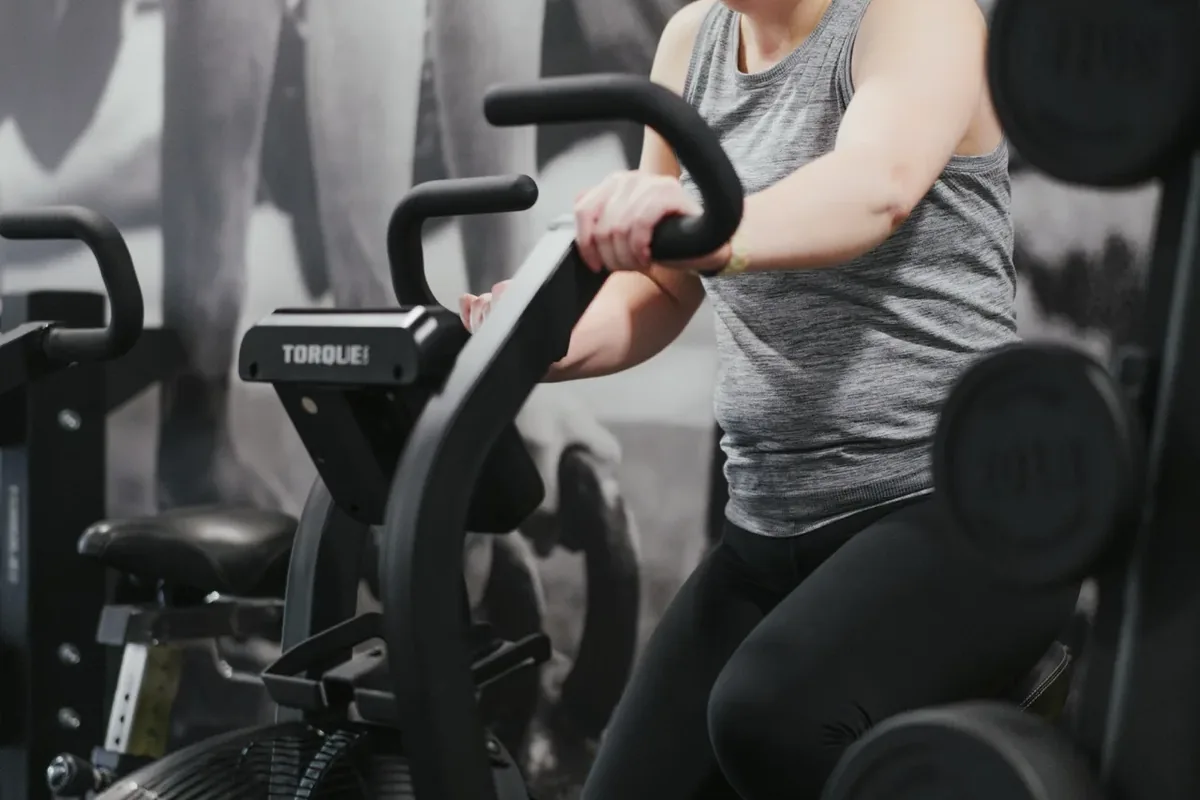
Why do endurance athletes lose strength faster than they think?
Because running and cycling train endurance, not strength, and after 40 the body stops maintaining what it is not asked to keep. Thousands of repetitions of the same small range of motion are excellent for your heart and lungs and do almost nothing for the force your legs can produce, the stability of your hips, or the strength of your upper body and trunk.
The pattern we see in the studio is consistent. A runner in her fifties who can hold a steady pace for ten miles struggles with a single-leg step-up. A cyclist in his late forties with a strong engine has a back that seizes when he rakes leaves. Neither is out of shape. Both are missing the strength that their sport never built and that the years have been quietly taking.
What does strength training do for a runner or cyclist?
It makes each stride and pedal stroke cost less. Stronger legs produce more force with less effort, which shows up as easier hills on the Military Ridge trail and a steadier finish when the pace gets hard. Stronger hips and trunk hold your form together late in a long run, when the wheels usually come off. A stronger upper body keeps your posture on the bike from collapsing at mile forty.
The research here is unusually consistent: endurance athletes who add well-programmed strength work tend to see better economy and hold up to training better than those who do not. We will not promise you a personal record, because strength work is one input among many. What we can say is that our runners and cyclists consistently report that the miles feel better, and that the nagging things that used to interrupt a season interrupt it less.
What should you add?
Less than you think, done heavier than you think. The movements that matter for a runner or cyclist fit on one hand:
- A squat pattern, usually a goblet squat or a box squat to start, for the force your legs produce.
- A hinge, like a kettlebell deadlift or a Romanian deadlift, for the glutes and hamstrings that running and cycling underuse.
- Single-leg work, step-ups and split squats, for the balance and hip stability that every stride depends on.
- A carry, loaded and walked, for trunk strength that transfers directly to holding form when tired.
- A push and a pull, a press and a row, for the upper body that spends hours folded over handlebars or swinging loosely at your sides.
Done as a coached 50-minute session, two times a week, that is a complete strength program for an endurance athlete over 40. Loads go up in planned steps, reps stay moderate, and you leave ready to run or ride the next day.
What should you skip?
Anything that adds more endurance. Long circuits, high-rep burnout sets, metabolic finishers, classes that leave you wrecked: these feel like hard work, and they are, but they duplicate the volume your sport already provides while skipping the strength you are missing. They also leave your legs too tired for the workouts that actually matter.
Skip training through pain, too. If a movement aggravates the knee or the hip that your sport is already asking a lot of, the answer is a modification, not grit. That is one of the main reasons to do this work with a coach in the room rather than from a video.
Key Takeaway
Runners and cyclists over 40 need strength more than more miles. Two coached sessions a week built around a squat, a hinge, single-leg work, a carry, and a push and pull cover it. Skip the circuits and burnout sets. Lift heavier and shorter, fully recover, and let the strength show up as easier hills and a steadier finish.

How does it fit into a training week?
Around the sport, not on top of it. The placement rule is simple: keep your hard days hard and your easy days easy. Strength sessions go after an easy run, or on the same day as a hard workout with a few hours between, so your recovery days stay recovery days. Two sessions a week fits most training plans. During a heavy block before a race, one well-placed session is enough to keep strength from sliding.
At Alloy Personal Training Middleton, your coach builds the strength program around your running or cycling schedule. Sessions are capped at six, run about 50 minutes, and are available mornings and evenings, so a session on the way to or from work on the west side is realistic. Plenty of our members ride in from Verona and Fitchburg, train, and head home on the trail.
How do you know it is working?
Because we measure it. Your monthly InBody scan tracks lean muscle and body fat percentage, which matters to endurance athletes who worry about adding weight: what we typically see is body fat going down while lean mass holds or climbs. Strength benchmarks get retested in the studio. And the feedback that matters most comes from your sport: the hill that stopped being an event, the long ride that did not end in a sore back.
How do you start?
With an assessment. Get Your Complimentary VIP Session at our studio at 8333 Greenway Blvd, Suite 140, just off the Beltline on Middleton's west side. The Complimentary VIP Session includes a strength and mobility assessment, an InBody scan, a conversation about your training and your race calendar, and a small group training preview. You leave with a customized plan that fits your season. You can read more about how we program strength training for adults over 40 before you come in.