
Pickleball asks more of a body over 40 than it looks like it does, and the players who stay on the court for years are the ones who strength train off it. The game is all quick starts, sudden stops, lunges to the kitchen line, and reaching overhead, repeated for two hours on a hard surface. Those are exactly the movements that legs, hips, and shoulders over 40 tend to be least prepared for. This post covers the five movements worth training, what to skip, and how two coached sessions a week in Middleton keep you playing.
Why does pickleball need strength training?
Because the game is built from movements that load the body hard and fast, and it does not build the strength to handle them. A dink rally at the kitchen line is a long series of partial squats. Chasing a lob is a sprint and a sudden stop. A third-shot drop from a deep lunge asks your front leg to absorb your whole body weight and push back out of it. Overheads ask the shoulder to go up and through, over and over.
Pickleball is very good at making those movements happen. It is not very good at making them strong. After 40, that gap shows up predictably: legs that feel heavy by the second hour, a hip that complains on the drive home, a shoulder that needs a day off after a long session. The players we coach at Alloy Personal Training Middleton came in for exactly those reasons, and the fix was not more pickleball.
What should a pickleball player train?
Five movements, done progressively with a coach:
- A squat pattern, a goblet squat or box squat to start, for the legs that spend every rally in a half-squat.
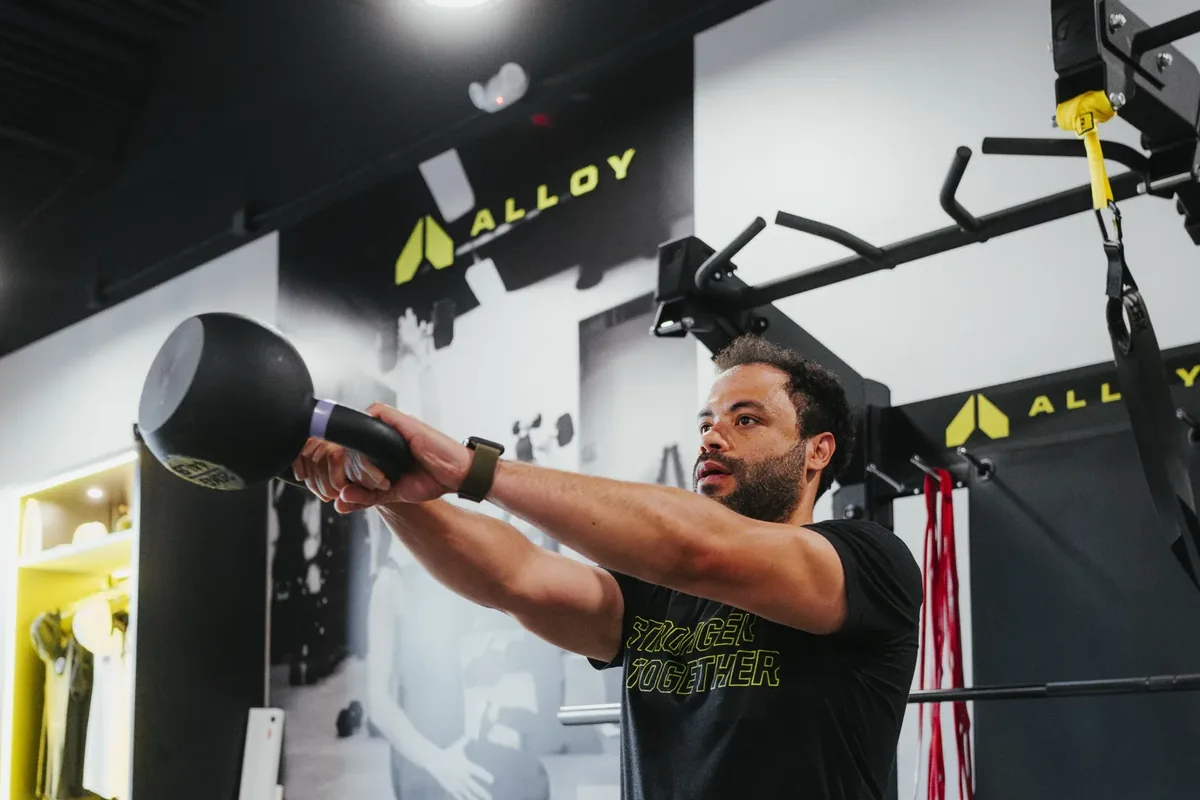
- A hinge, a kettlebell deadlift or Romanian deadlift, for the glutes and hamstrings that power the push out of a lunge and protect the back when you bend for a low ball.
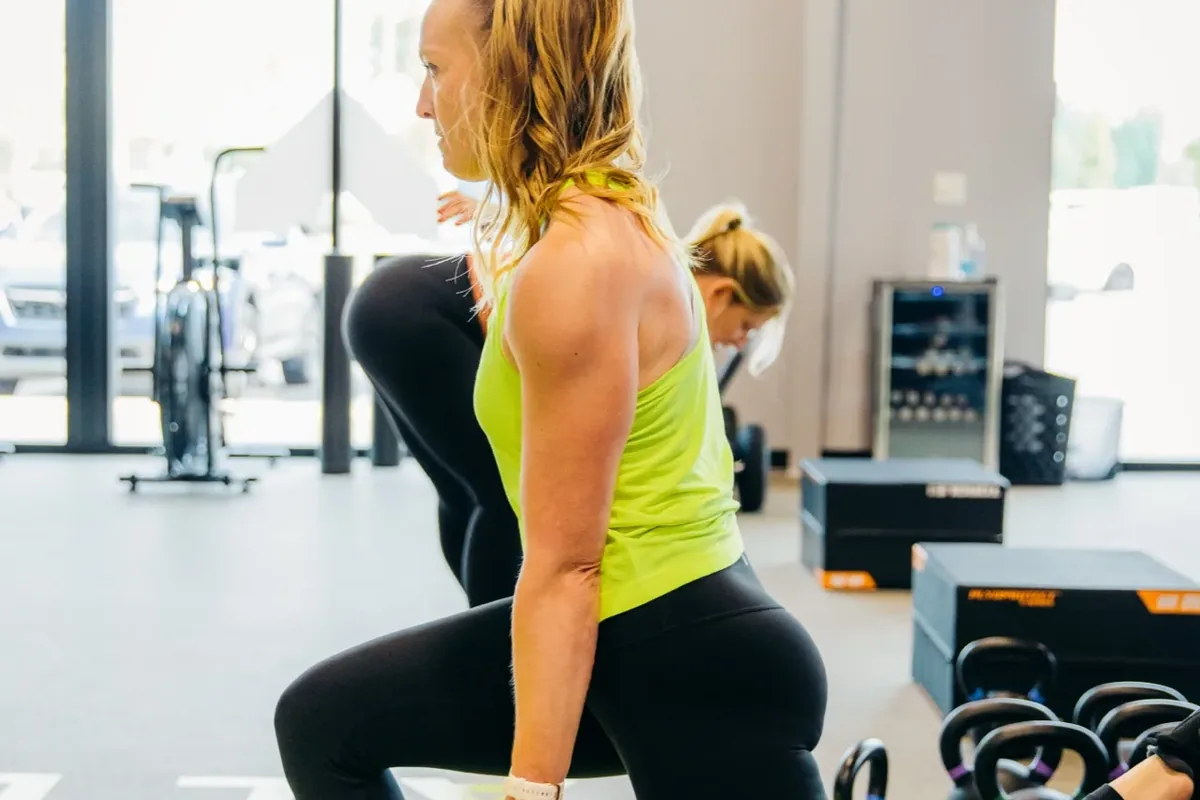
- Single-leg work, step-ups, split squats, and lateral lunges, for the one-legged stopping, starting, and side-to-side movement that pickleball is made of. This is the category most players are missing entirely.
- A loaded carry, for the trunk strength that keeps you stable when you reach and rotate at speed.
- A push and a pull, a press and a row, for shoulders that need to be strong and balanced to handle a season of overheads and serves.
Done as a coached 50-minute session twice a week, with loads that go up in planned steps, that is a complete strength program for a pickleball player over 40. Balance and change-of-direction work can be layered in as you get stronger, and your coach will do that based on how you move.
What should you skip?
Anything that duplicates the game or wrecks you for it. Long circuits, high-rep burnout sets, and classes that leave you limping to the car add fatigue without adding strength, and they leave your legs in no condition for Saturday's matches. Skip training through pain, too. A hip or a knee that pickleball is already asking a lot of does not need grit; it needs a modification, and that is the reason to do this work with a coach in the room rather than from a video.
Key Takeaway
Pickleball loads the legs, hips, and shoulders hard and fast, and the game does not build the strength to handle it. Two coached strength sessions a week, built around a squat, a hinge, single-leg work, a carry, and a push and pull, give players over 40 the base the sport assumes they already have. Skip the circuits; lift heavier and shorter.
How does it fit around playing?
Around the court schedule, not on top of it. Two strength sessions a week fits most players, placed on days you are not playing, or well after a morning session so your legs recover before the next one. During league season or a tournament week, one well-placed session is enough to keep strength from sliding. Sessions at Alloy Middleton are available mornings and evenings and run about 50 minutes, so a session before work on the west side and a match after is a realistic Tuesday.
Your coach builds the program around your playing week at your Complimentary VIP Session. Plenty of our members play at the courts around Middleton, Verona, and Fitchburg, and their training calendar follows their league calendar.
What changes, and how do you know?
Most members notice more energy and strength within the first few weeks of consistent training. On the court, that typically shows up as legs that still have something left in the second hour, and a body that recovers faster between playing days. Body composition changes show on the monthly InBody scan over eight to twelve weeks; strength benchmarks get retested in the studio. Because we measure it, you know the work is doing what it was built to do.
A word on what we will not promise: we are coaches, not clinicians, and strength training is one input among many in how a body holds up. What we can say is that our players consistently report that the game feels better and that the nagging things that used to cost them weeks cost them less.
How do you start?
With an assessment, not a workout. Get Your Complimentary VIP Session at our studio at 8333 Greenway Blvd, Suite 140, just off the Beltline on Middleton's west side. The Complimentary VIP Session includes a strength and mobility assessment, an InBody scan, a conversation about your goals and your playing schedule, and a small group training preview, and you leave with a customized plan that fits your season. You can read about how we program strength training for adults over 40 first, or see how small group personal training works.