
The difference between small group personal training and a group fitness class comes down to two questions: whose workout are you doing, and who is watching you do it? In a class, you do the instructor's workout, and the instructor is leading from the front. In small group personal training, you do your own program, and a coach is watching your reps. Middleton has plenty of both, from the class studios around Greenway Station to the big clubs along the Beltline. Here is how to tell which one will actually get you results, especially after 40.
What is a group fitness class, really?
A class is one workout, designed in advance, delivered to everyone in the room at the same time. Spin, bootcamp, HIIT circuits, a barre class: the format varies, but the structure is the same. The instructor demonstrates, cues the room, keeps the energy up, and moves on. If you are in the back row with a cranky knee, the class does not know that, and it cannot stop for you.
Classes do some things well. They are social, they are scheduled, and the energy is real. For someone who already trains well and wants a hard hour with music, a class is a fine choice. The trouble starts when a class is your only plan for getting stronger, because a workout that is the same for twenty people is, by definition, designed for none of them.
What is small group personal training?
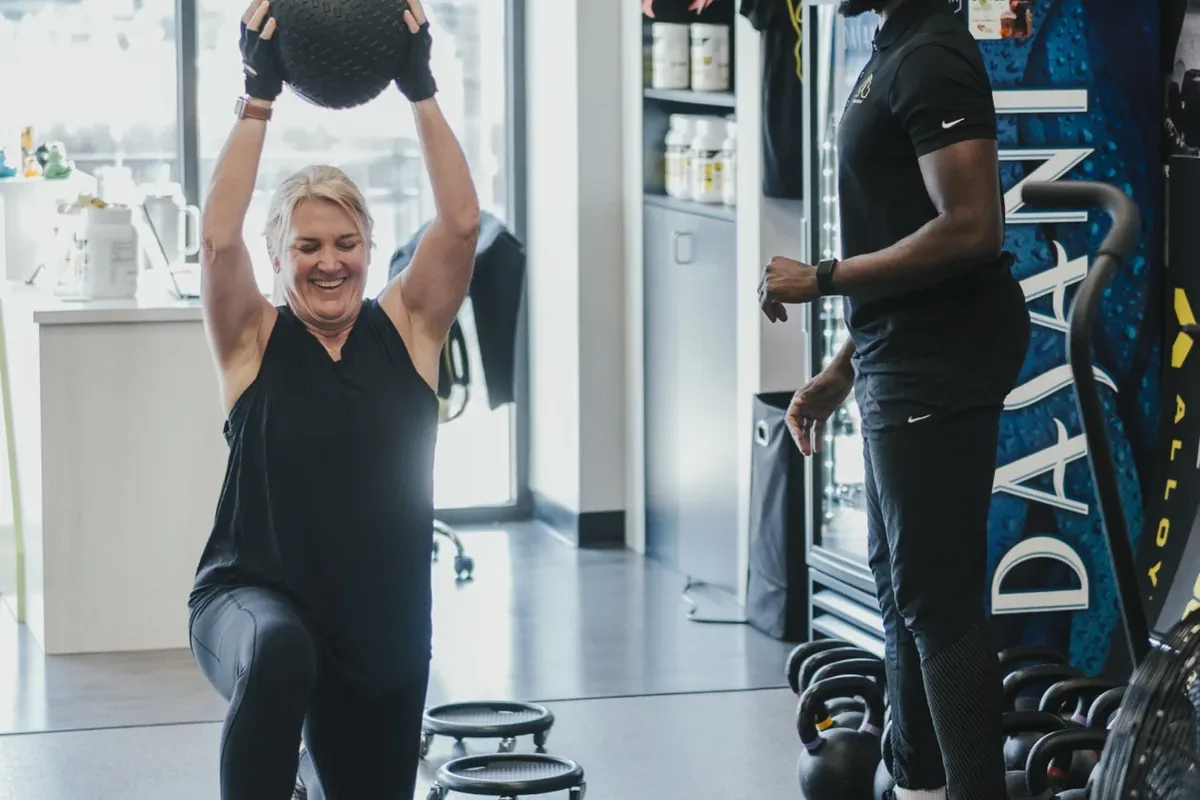
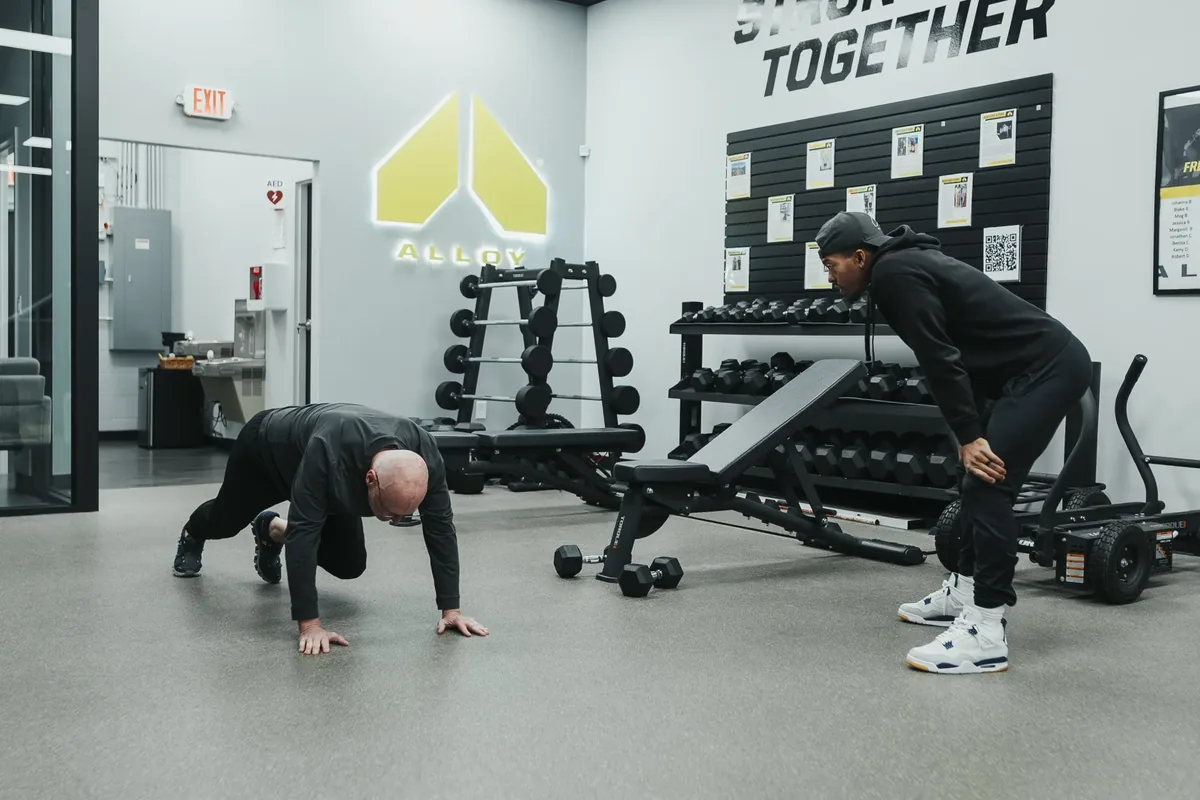
Small group personal training is personal training with a few other people in the room. At Alloy Personal Training Middleton, that means sessions capped at six members, led by a certified coach for the full 50 minutes. Every member follows their own program, built from their Complimentary VIP Session assessment and adjusted as they progress. The coach demonstrates each movement, watches the reps, changes a load, swaps an exercise when something does not fit, and knows everyone in the room by name and by history.
The group is not a class. It is six people doing six programs, side by side, with one coach responsible for all of them. Members here train together, but they are coached as individuals. You can read the full model on our small group personal training page.
Why does the number six matter?
Because coaching has a ceiling. One coach can genuinely watch six people at once: see every set, catch a collapsing knee, notice that someone is rushing the lowering phase, adjust a weight before the next round. Nobody can coach twenty-five people at once. At that size, the best anyone can do is lead from the front and hope, which is exactly what a class is.
The cap is the entire reason the format works. It is the difference between being supervised and being led. Six is small enough that the coach's attention is a real, measurable thing you are getting every session, and large enough that the room has energy, accountability, and people who notice when you are missing.
How do the two compare?
| What you get | Group fitness class | Small group personal training |
|---|---|---|
| Whose workout | The instructor's, same for everyone | Yours, built from your assessment |
| Who is watching your form | Nobody, or a quick glance | A coach, every set |
| Room size | Often 15 to 30 | Capped at six |
| Progression over time | Whatever the class does that day | Planned blocks that get harder as you do |
| Old injuries | "Modify as needed" | Modifications built into your program |
| Measured progress | Rarely | InBody scan at the start, then monthly |
| Accountability | Show up if you feel like it | Scheduled sessions with your name on them |
Key Takeaway
A group fitness class gives everyone the same workout with nobody watching closely. Small group personal training gives each person their own program with a coach watching every rep. The six-person cap is what makes the second one possible, and for adults over 40 it is usually the difference between a workout and a result.
Which one is better for adults over 40?
For most adults over 40, small group personal training is the better fit, and the reasons are practical rather than flattering. After 40, you have a history: a desk career, an old sports injury, a back with opinions. A class cannot account for any of that. A coach can, and does, from the first session.
Progression matters more too. Getting stronger at 52 is a matter of consistent, planned increases in load over weeks and months, not a different random workout every Tuesday. That kind of progression only happens when someone is tracking it, which is what your coach and your monthly InBody scan are for. Members who came to us from years of classes are often surprised by how much stronger they get once the workouts stop changing every day and start building on each other.
And recovery is part of the program now, not an afterthought. Two or three well-built sessions a week beat five punishing classes at every age, but after 40 the margin is not optional.
When is a class the right call?
When you want it in addition to coached strength work, not instead of it. Plenty of our members still take a spin class, swim at the Y, or run the Pheasant Branch trail on their off days. The coached sessions are the anchor that makes the rest of it sustainable: the strength work is planned and progressed, and everything else is for enjoyment. That is a good week.
If a class is your only strength plan, though, you are mostly buying a hard hour with no direction, and after 40 that tends to produce soreness more reliably than progress.
How do you see the difference for yourself?
Come try the format. Every membership at Alloy Middleton begins with a complimentary VIP Session: a conversation about your goals and history, an InBody scan, a strength and mobility assessment, and a small group training preview so you can feel what coached training is like before you decide anything. Get Your Complimentary VIP Session at our studio at 8333 Greenway Blvd, just off the Beltline. If you have spent the last few years in the back row of a class hoping nobody was looking, this is the room where someone finally is.